6.4.6(d) The cardinal directions of the earth;
When talking about direction over the Earths surface, we use North , East , South, West.
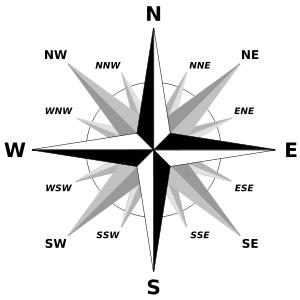
6.4.6(d) The cardinal directions of the earth;
When talking about direction over the Earths surface, we use North , East , South, West.
[vfr_FlashCards p1=”6.2″]
[vfr_FlashCards p1=”6.70″]
Describe the procedures and techniques to safely manage the fuel for a given flight.
Most flight plans have a column for fuel consumption rate and a column for fuel used per segment.
Allowances made for reserves which should be no less than 30 minutes for aeroplanes during the day and 45 minutes at night.
To determine fuel consumption for each leg of a flight, you have to first know the fuel burn per hour, as well as the EET for each leg. This will give you the amount of fuel needed to fly the amount of time taken for the particular leg.
Derive, from an Aircraft Flight Manual, the Fuel Consumption Rate for a given leg.
When working out the Fuel Burn for a given aircraft, this figure can be found in the aircraft’s Flight Manual under Performance.
This figure will normally be in Litres / hour or gallons / hour.

[vfr_FlashCards p1=”6.32″]
To workout the distance travelled you need ….
1. Speed, in Knots which is nautical miles per hour.
2. and a Time in minutes.
In this example we have calculated your speed to be 120 Knots and you have been flying for 45 minutes.
On the Wizz wheel, Distance is on the outside and time is always on the inside.
1. Speed of 120kts on the outside (which is Distance travelled in an hour)
2. so, Time is on the inside, line-up the Hour [60 MIns].
Now we have a Distance and Time Ratio setup …
3. Find the time of 45 minutes on the inside (as time is on the inside).
4. Read off the Distance on the outside of 90 nm.
Derive or calculate the MCT and ECT at a given location (UTC, NZST and NZDT) Aeronautical Charts
MCT or ECT for a given location can be calculated by either logging into the AIP website with the following link, or looking up the pages in your AIP volume 1 GEN 2.7
http://www.aip.net.nz/pdf/GEN_2.7.pdf
ECT and MCT can be calculated by finding the correct zone for the area of the country, and then working out the time using the tables of times for each zone on a given date of the year.
When the exact date is not given, we must interpolate using times before and after the date we are after.
6.14.2(h) Drift (planned & Actual);
Drift is caused by the wind effect on an aircraft, and is defined as the angle between the aircraft heading and the aircraft track.
When planning a flight, we can work out the planned drift correction. Once we are in the air, the wind may differ from the planned wind, therefore we may need a new actual Drift Correction.
6.12.2(h) Pressure altitude (PA);
Pressure altitude is the altitude displayed when 1013 hPa is set on the altimeter sub scale barometer. It is the height above a standard datum.
Pressure Altitudes are commonly referred to as Flight Levels.