22.24.18
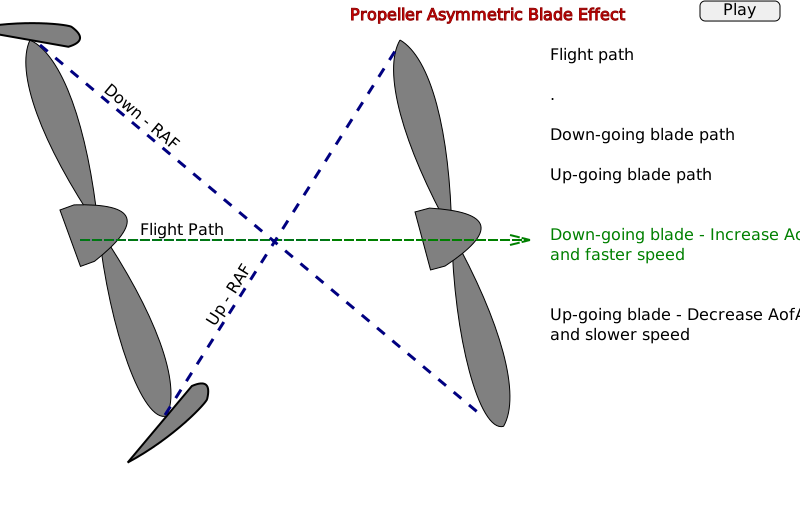
Describe asymmetric blade effect.
22.24.18 Describe asymmetric blade effect.
22.24.14
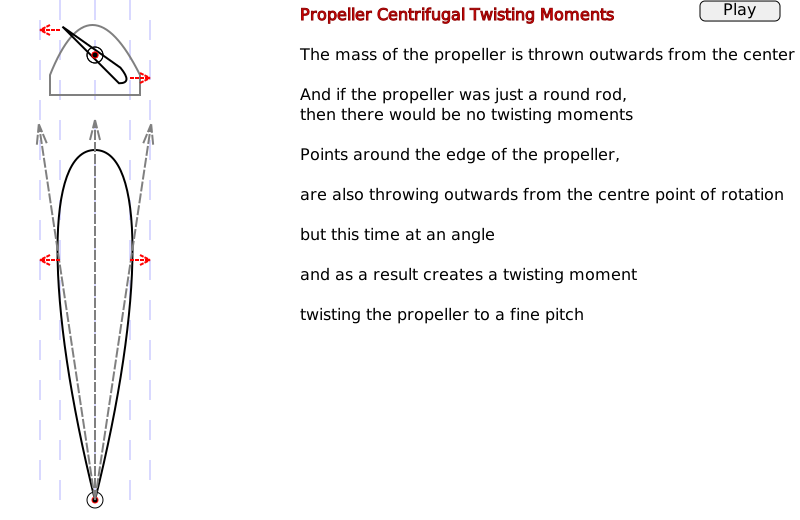
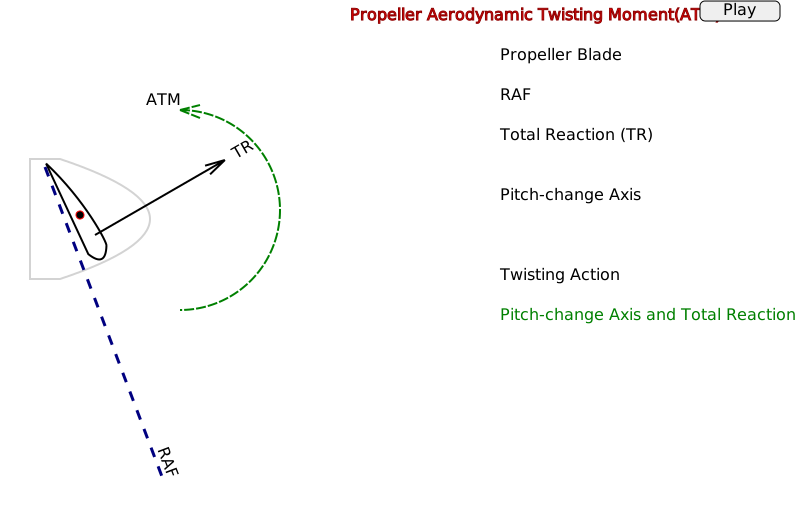
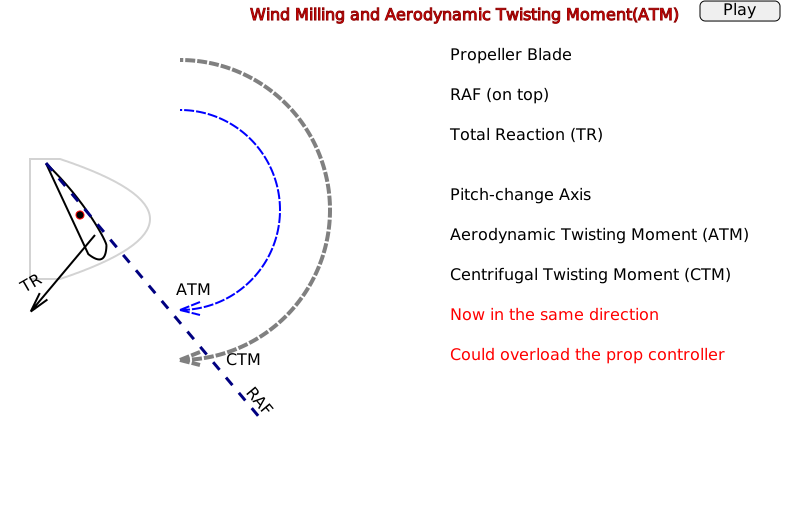
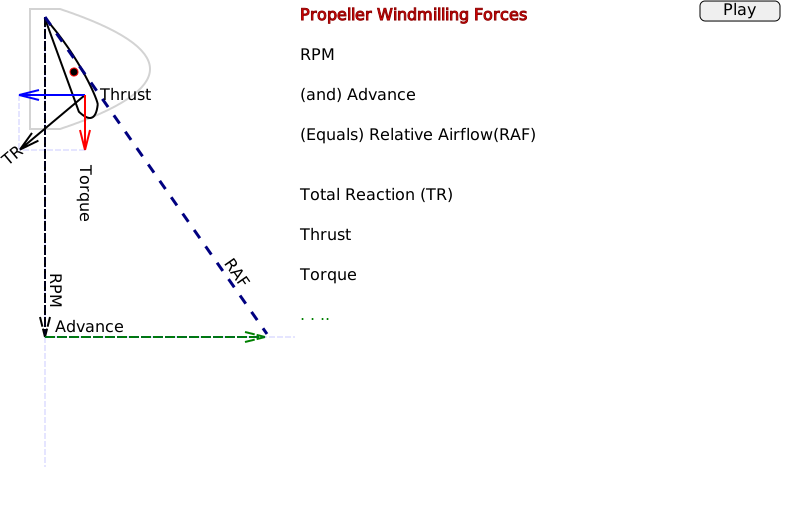
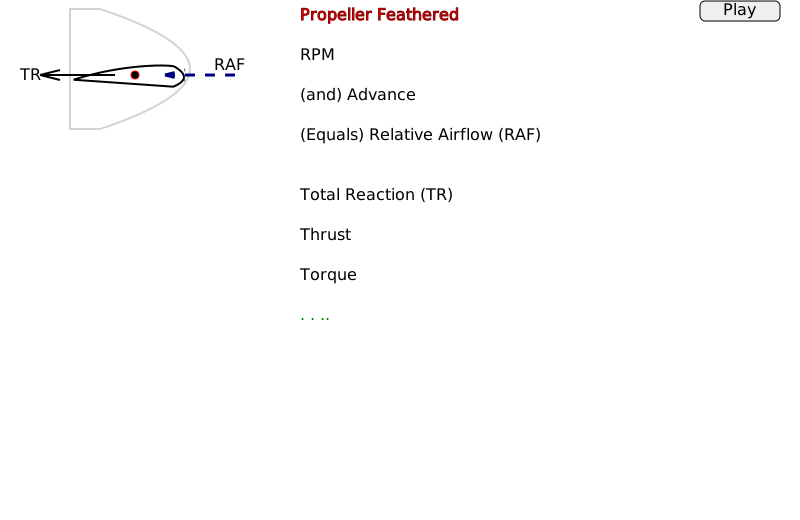
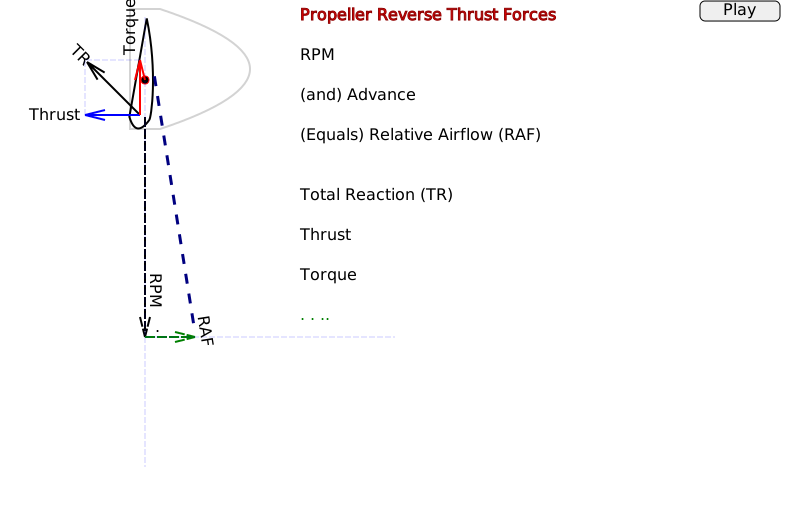
Describe the forces acting on a propeller when:
(a) windmilling;
(b) feathered;
(c) in reverse thrust.
22.24.12
Describe the correct procedure for handling manifold pressure and propeller controls.
The manifold control is the throttle control. In an aircraft with a constant speed propeller the throttle controls manifold pressure. The propeller control controls the aircraft rpm.
So when flying the aircraft the throttle is opened for takeoff and the propeller control is fully fine.
Once the aircraft is established in flight, the throttle is closed to achieve the required manifold pressure, and then the propeller control is reduced to achieve the desired rpm.

22.24.10
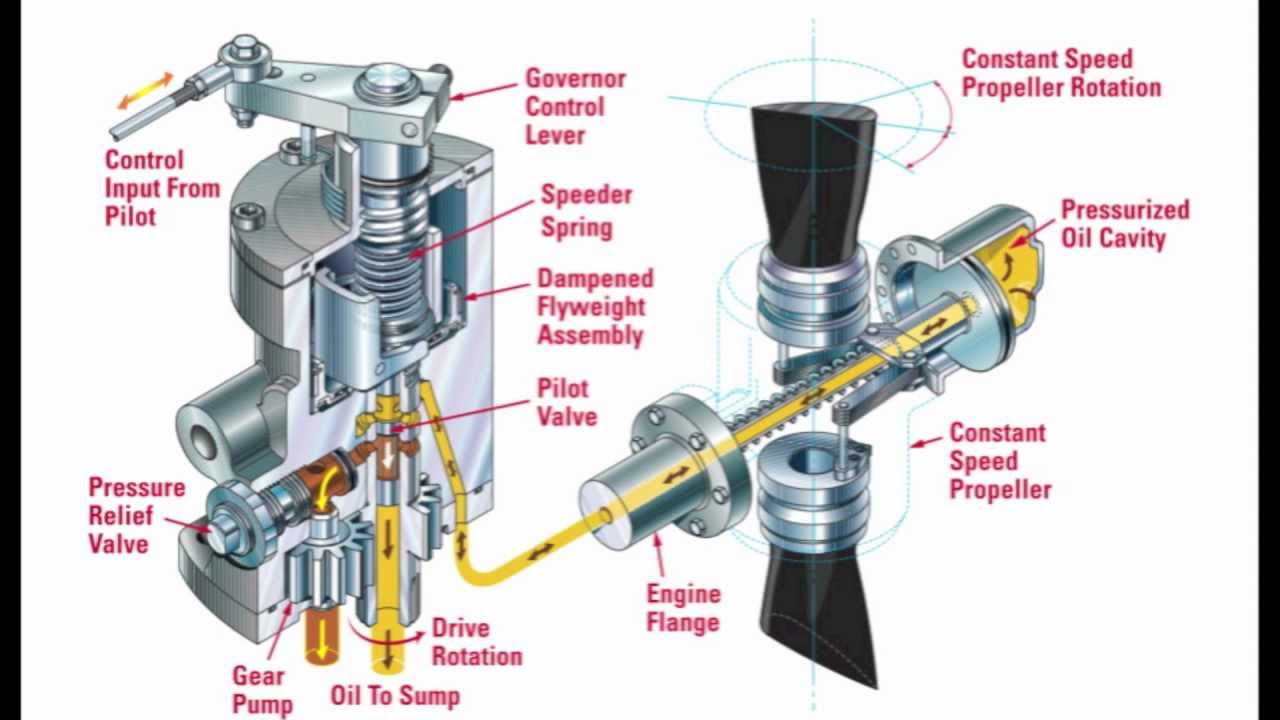
Describe in broad terms the operation of the constant speed unit (CSU) with changes in power setting and airspeed.
The constant speed propeller is controlled by the constant speed control unit attached to the side of the engine.
When the pilot opens the throttle the constant speed unit senses this change and coarsens the blade to absorb the extra power.
If the airspeed changes, the constant speed unit will also adjust the blade angle to absorb the changes in load on the engine. If the nose is lowered and the aircraft speed increases the propeller will increase. If the nose of the aircraft is raised the load on the engine will increase and the constant speed unit will fine the blade off.
22.24.8
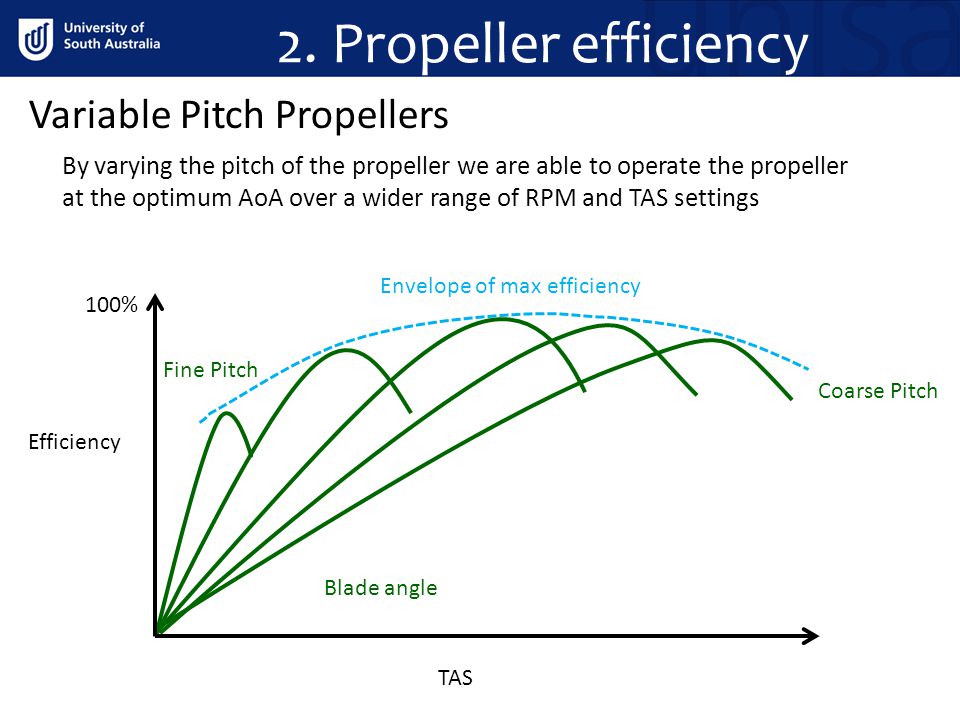
Explain the purpose of the constant-speed (variable pitch) propeller.
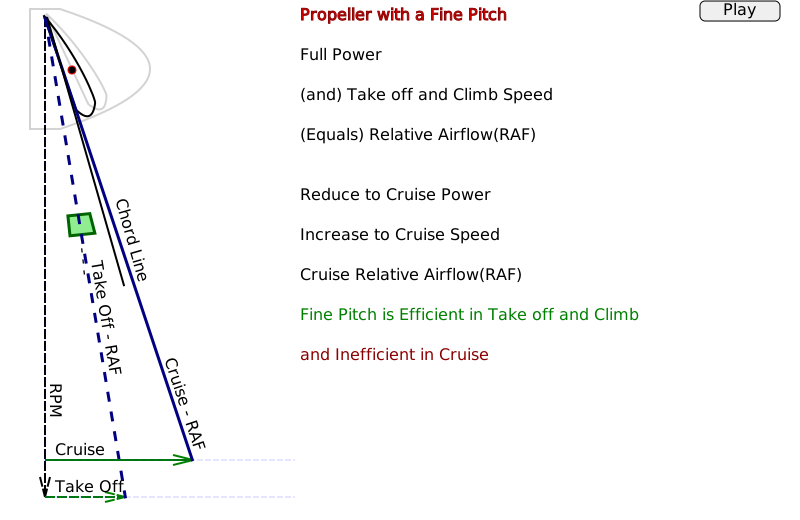
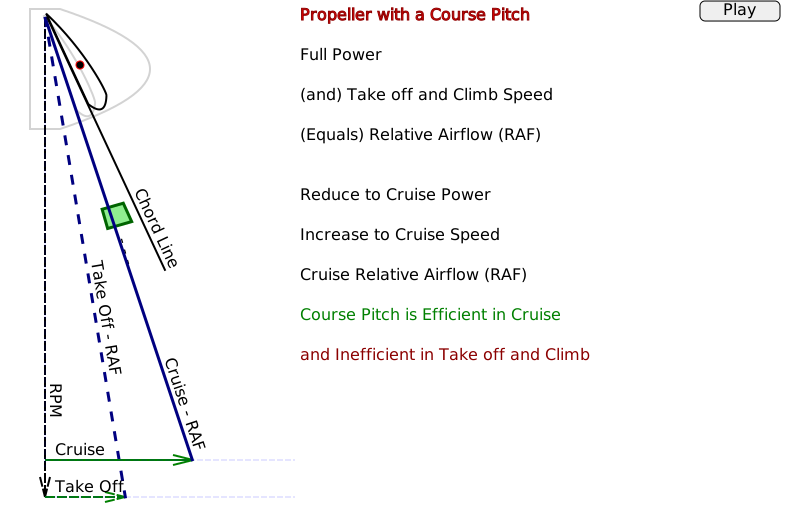
A constant speed propeller attempts to maintain the most efficient angle of attack over a wide speed range.
22.24.4
Describe the forces acting on a propeller blade; the rpm/airspeed relationship; and the most effective blade sections.
The forces acting on a propeller include thrust and torque. These are resolved from the total reaction. Torque is the resistance to rotation of the propeller and thrust is the driving force that is pulling the aircraft through the air.
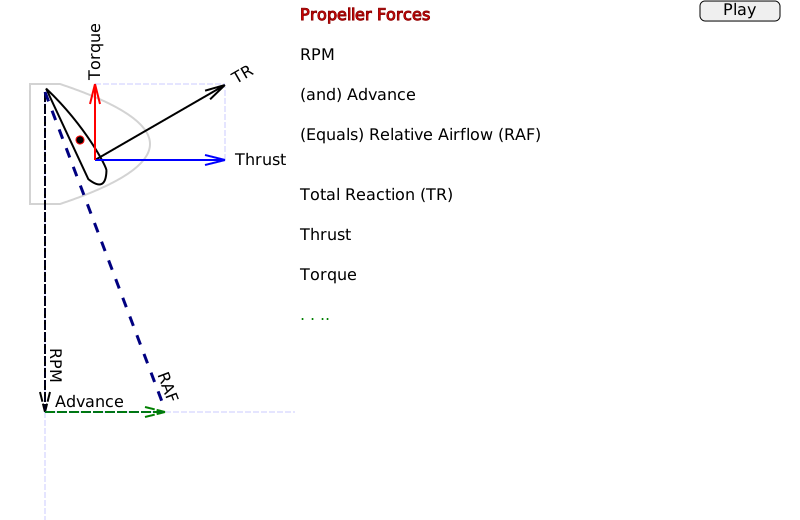
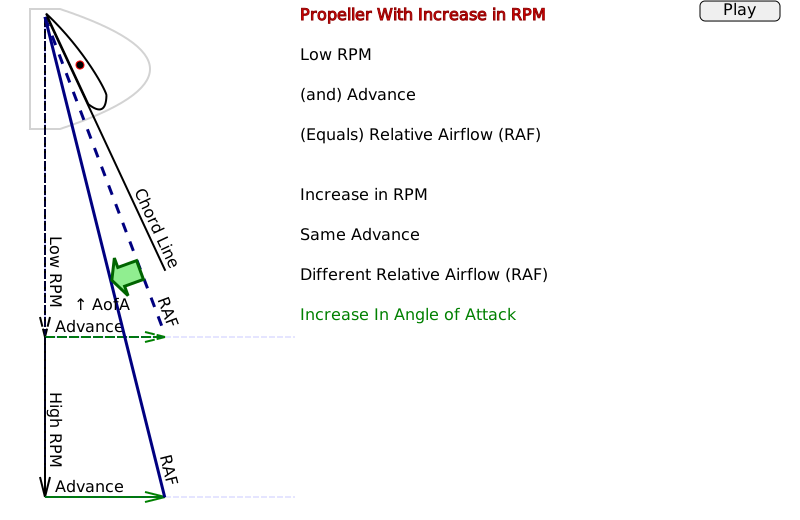
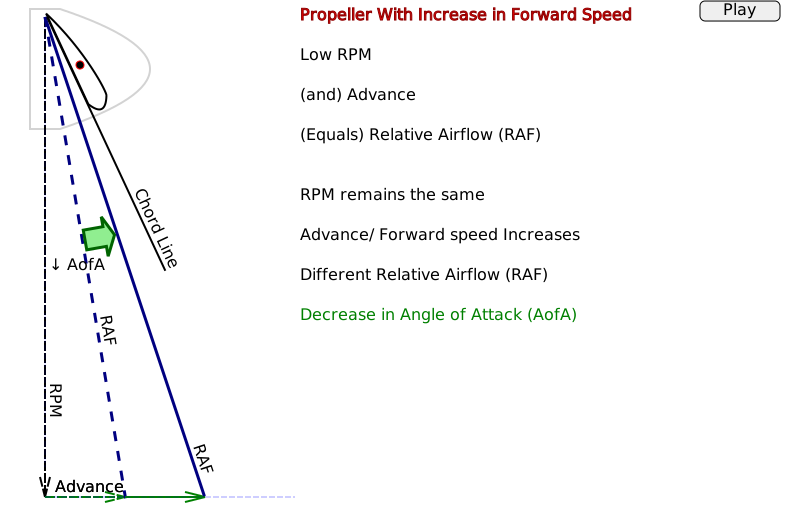
The RPM/ airspeed relationship is such that as airspeed increases, the angle of attack of a fixed pitch propeller blade at a constant rpm will decrease. At some high airspeed, the angle of attack will reduce to the point where little or no thrust will
be produced. Hence for a given rpm there will only be one forward velocity at which the fixed pitch propeller will operate at it’s most efficient angle of attack.
The most effective section of a typical fixed pitch propeller is typically 75% of the chord of the blade.
This is the point where the angle of the blade is measured.
22.24.2
Define blade face, blade angle, pitch (or helix) angle, helical twist, angle of attack.
| The blade face is the back side of the blade and the blade angle is the angle of the blade compared to the plane of rotation. | |
|---|---|
| Helix angle | is the angle from the plane of rotation to the angle of attack |
| Helical twist | 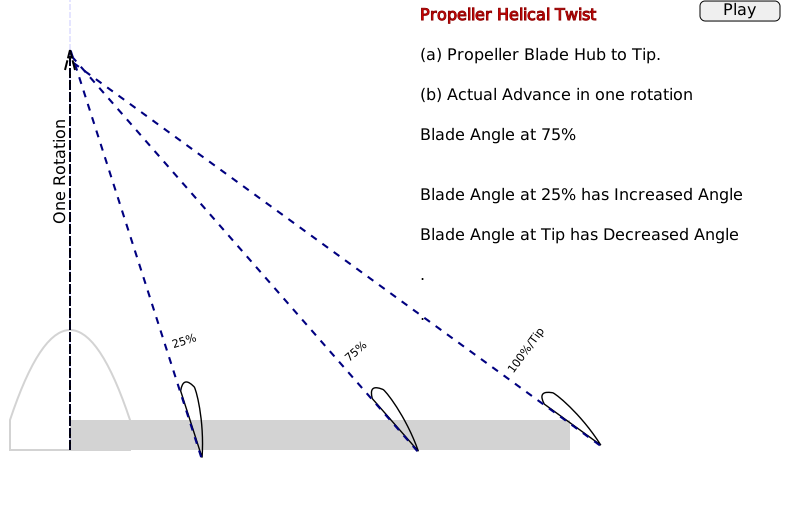
is the twist the blade has from root to tip. This is done to maximise the efficiency of the propeller. |
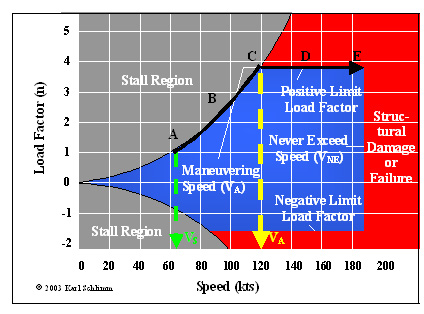
Va also known as manoeuvring speed is the maximum speed at which full and complete control movements can be used.
Va is the point on the diagram where the stall line meets the structural limits of the aircraft. See the yellow line on the diagram
Va is a variable speed based on the weight of the aircraft. As the aircraft gets heavier, Va increases. This is because the stall speed goes up as weight goes up and this moves the stall line on the diagram to the right, increasing Va