8.26.6 Describe the operational characteristics of the visibility sensor used in Automatic Weather Stations (AWS) and reported in METAR AUTO reports
The visibility sensors used in AWS are called ‘Forward Scatter Meters’. They fire out a beam of infrared light which is scattered by minute particles floating in the air. Some of the light beam will be scattered into the
receiver about half a metre away. From the amount of scatter received, the instrument can measure the turbidity of
the air, and then calculate the horizontal visibility by extrapolation. They operate by day or night.
The visibility is only sampled near the sensor; therefore, the limitations are:
• The prevailing visibility may be much better than reported if there is localised mist or fog near the sensor
only. In such situations, it would be useful to view a sequence of recent reports rather than one routine
report in isolation.
• The prevailing visibility may be very poor in some areas around the aerodrome if fog has formed over the
airfield but not near the sensor.
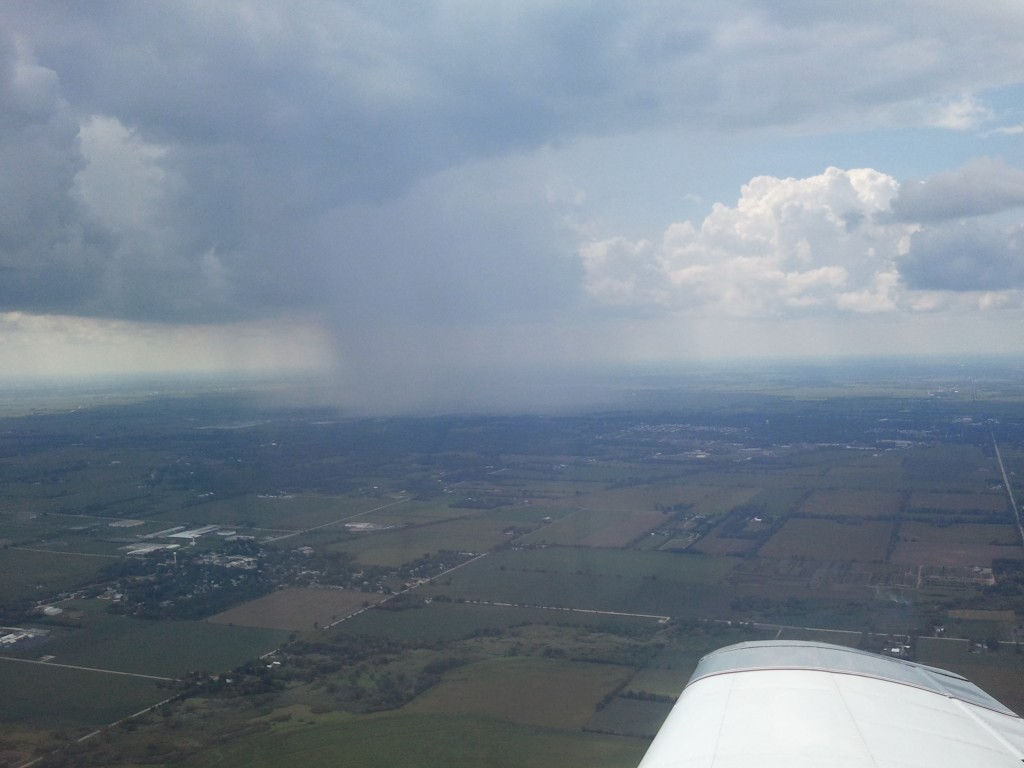
• Approaching poor visibility associated with an isolated shower, or rain with a front will not be measured
until it reaches the sensor.
• The sensor cannot determine directions where there are significant visibility variations.
• Most of the MetService visibility sensors are limited to reporting visibility up to 20km only. Thus, when
visibility is reported as 20km, it could be considerably better than that.