Our simple log process is just... 1. You enter your email (the one you use to correspond with the flying school) 2. we send you a link. 3. you click the link in your email 4, then you are all log in , ready to go. no password etc / simple as!
Pressure Lapse Rate is the reduction in ambient pressure with the increase in height.
This is due to there being less weight of air above the measuring point; as elevation increases there is less overlying atmospheric mass, and so less ambient pressure.
State the composition and structure of the atmosphere.
The atmosphere is an envelope of air between the Earth’s surface and space. These gasses dictate how the Earths atmosphere behaves. This envelope of air is made up of:
78% Nitrogen
21% Oxygen
1% comprising of Argon, Hydrogen, Ozone and Carbon Dioxide.
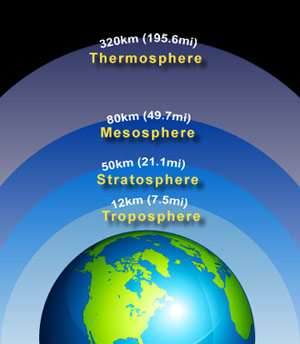
The atmosphere is divided into layers extending from the Earth’s surface. The first layer is the Troposphere – in which most of the air is concentrated, and and generally contains most of the weather which affects us as pilots. The Troposphere extends 30,000ft over the poles and 60,000ft over the equator. This is capped off by the Tropopause.
The second layer is the Stratosphere, extending from the Tropopause to the Stratopause; which generally extends to 150,000ft from the Earth’s surface.
This layer generally contains little to no air or moisture, meaning it is not common for cloud to form in the stratosphere.
Describe the presence and importance of the following in the atmosphere:
a)  carbon dioxide
b)  ozone
c)  water vapour.
All three gases are present in our atmosphere, and all three affect and change the atmospheric conditions and how our aircraft performs.
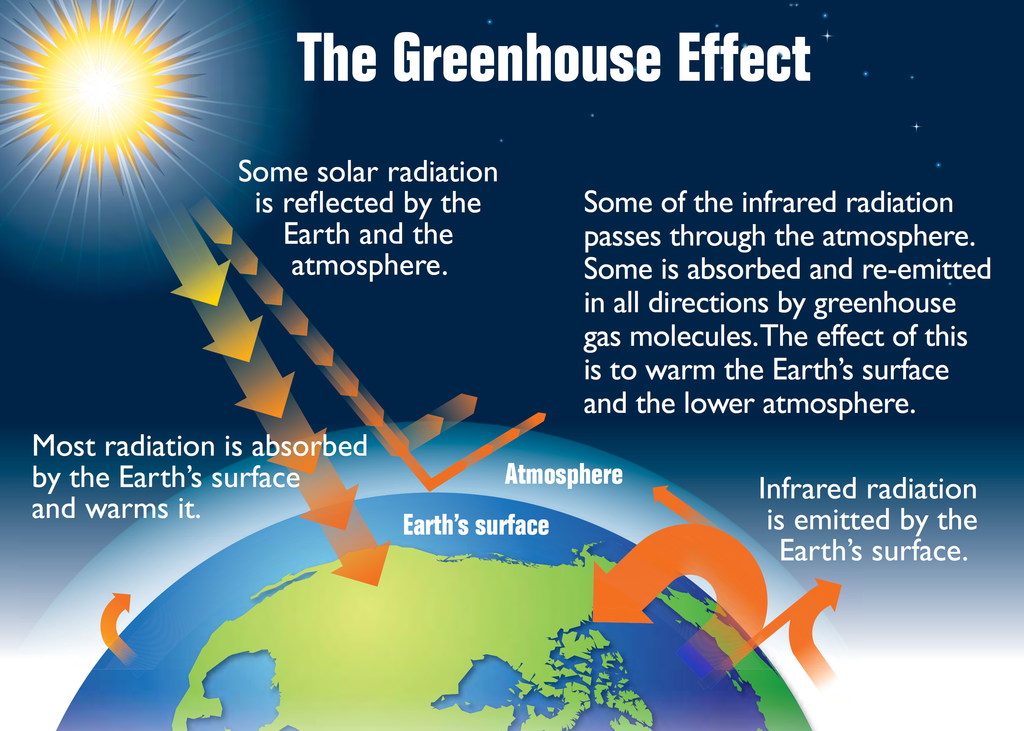
Carbon dioxide and other similar ‘waste gasses’ have the ability to trap heat; with excess amounts of these waste gases the ‘greenhouse effect’ takes place and the atmosphere is warmed.
Ozone is an important gas which filters out and blocks much of the harmful ultraviolet radiation from the sun reaching the Earths surface.
Water vapour is present in variable amounts depending on the temperature of the air; the warmer the air, the more water vapour it can hold. Generally, when air cools some of the vapour turns to liquid water or ice and clouds.
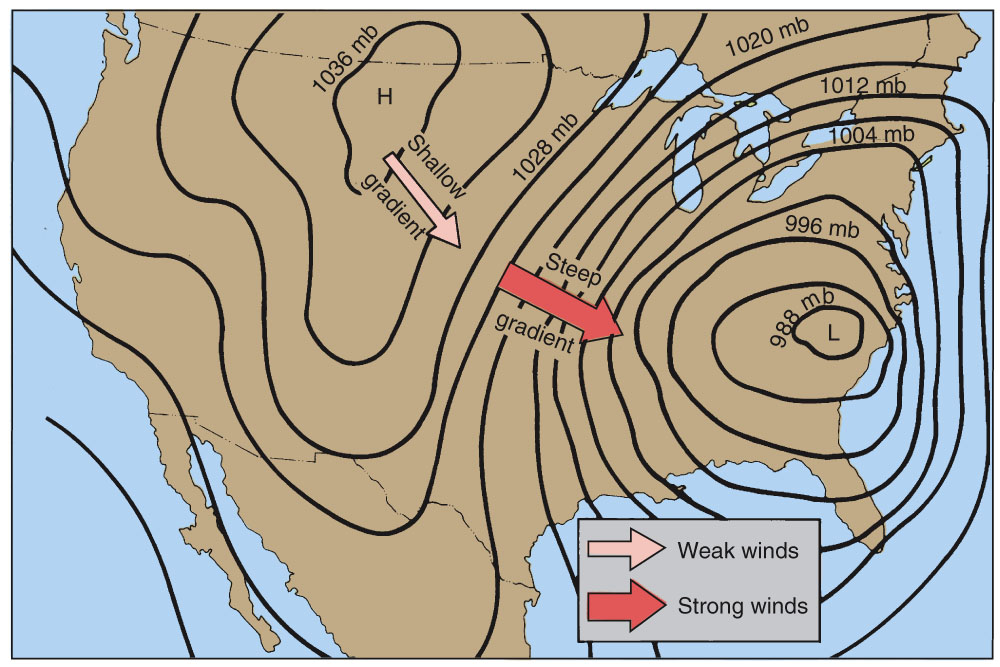
h) Pressure gradient is the atmospheric pressure change per horizontal distance.
Higher – Stronger Wind Lower – Winds light
The Pressure Gradient is the difference in pressure per horizontal distance – it is a force – always acting at right angles to the isobars and always from High to Low
8.4.2 Identify the following features found on surface weather maps:
(a) isobars;
(b) anticyclone (“high”);
(c) depression (“low” or “cyclone”);
(d) ridge of high pressure;
(e) trough of low pressure;
(f) col;
(g) fronts (cold, warm (warm sectors), occluded and stationary);
(h) tropical cyclones.
8.4.4 Explain the most common weather characteristics of each feature.
Weather Map Features
Features
Identify / Characteristics
(a) isobars;
(b) anticyclone (“high”);
(c) depression (“low” or “cyclone”);
(d) ridge of high pressure;
(e) trough of low pressure;
(f) col;
(g) fronts (cold, warm (warm sectors), occluded and stationary);
(h) tropical cyclones.
Define and describe:
a)  isobar;
b)  wind velocity;
c)  anticyclone (high);
d)  depression (low);
e)  ridge of high pressure;
f)  trough of low pressure;
g)  col;
h)  pressure gradient.
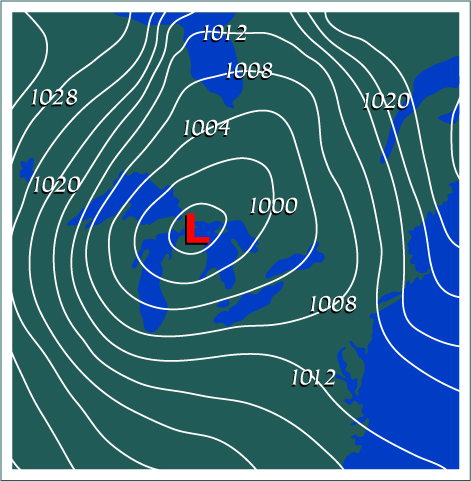
a) An isobar is a line of equal pressure; as displayed below
b) Wind velocity is strength and direction of the wind for a given height or area.
Such as 270/15 this means the wind is coming from 270 degrees, at 15 knots
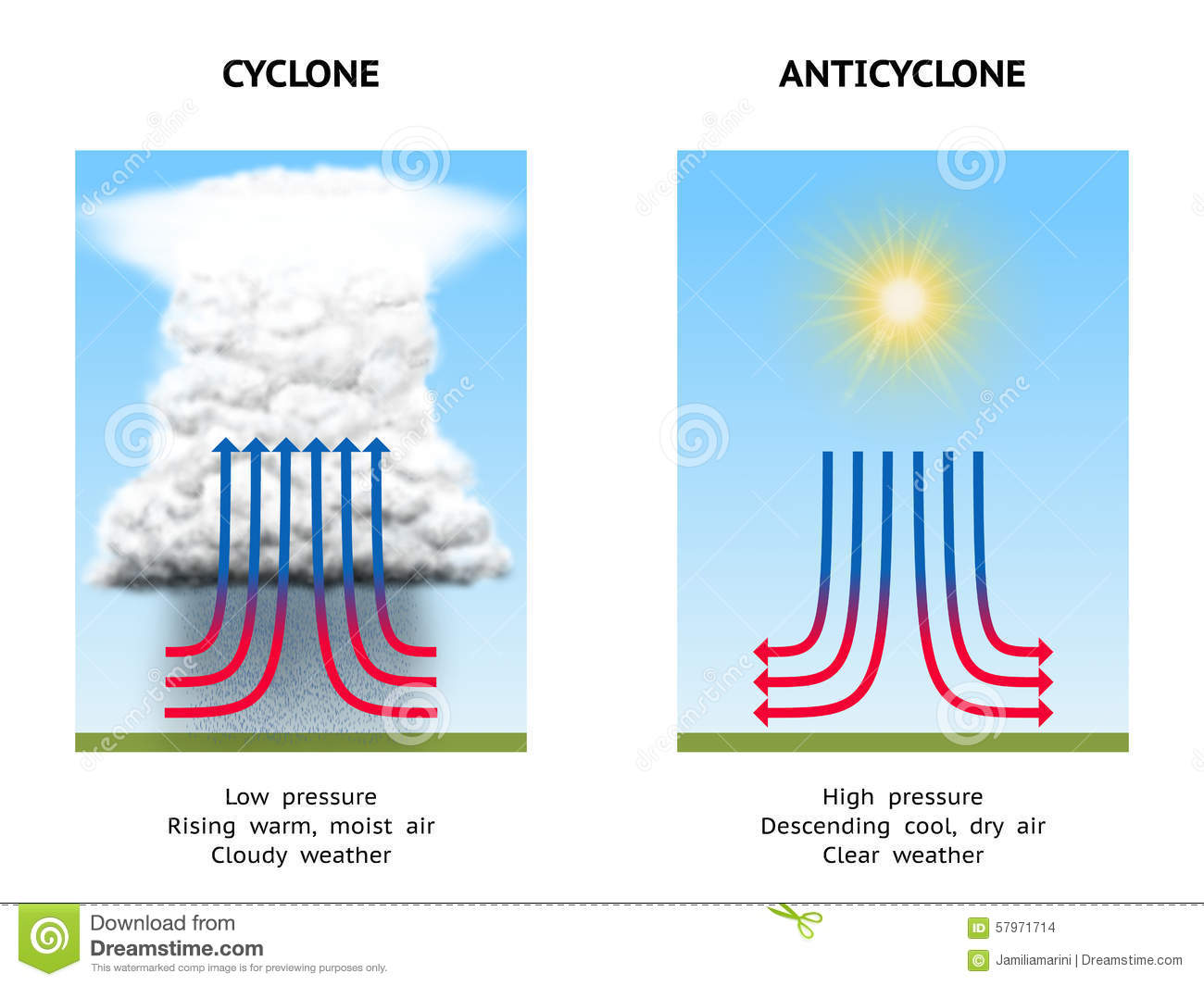
c) Anticyclone (high) System with greatest pressure in the the centre. Wind rotates Anticlockwise (Southern Hemisphere). Air subsides(goes down) compresses and warms.
d) Depression (low)
System with lowest pressure in the the centre. Wind rotates Clockwise (Southern Hemisphere). Air rises causing expansion and cooling thus invisible water vapour may condense into visible water, clouds.
e) A ridge is an extension off a High and has the same characteristics as the High
f) A trough is an extension off a Low and has the same characteristics as a Low
g) A col is an area between 2 highs and 2 Lows. Wind is very light or calm.
h) Pressure gradient is the atmospheric pressure change per horizontal distance.
Higher – Stronger Wind Lower – Winds light
The Pressure Gradient is the difference in pressure per horizontal distance – it is a force – always acting at right angles to the isobars and always from High to Low
In order to obtain the applicable weather information for your flight, first you must log on.
Once logged in, you are shown a map of the country. You must click on the the areas of the map that are applicable with your flight (the areas that you will be flying to/in)
Once the areas are selected, click on “get weather briefing” to be presented with the appropriate weather including; SIGMETS, ARFORS, TAF’s and METARS.
MetFlight’s other features also include things such as Webcams, Radar, cloud and rain forecasts as well as other charts and features than provide you with information on the prevailing weather conditions and forecasts.
Have a play around with all the features so that you are familiar with MetFlight and that you can make appropriate go or no go decisions.
To get access to MetFlight GA you need to enter your: Username and Password …
Username:
The first input field in the logon process (Username) is the pilot licence number for CAA Licensed (Part 61) pilots, or the membership or flying certificate number for those people who are a member of a Part 149 Aviation Recreation Organisation.
Note: For the Part 149 Aviation Recreation Organisation members, a prefix is needed in front of the membership number (usually the first letter(s) of the name of the organisation) to avoid confusion between membership numbers of different Part 149 organisations. No prefix is required for CAA Part 61 pilot licence numbers.
Password:
The second field in the logon process (Password) for CAA Part 61 pilots is the INITIAL GRANT DATE of their license (lower right side of license) as set out on the reverse side of the license but input in the form d/mm/yyyy – ie; with NO leading zero on the day but WITH a leading zero on the month (eg; 5/12/2003 or 21/01/1991).
Do not forget the ‘/’ in the password as shown in the previous example.