Describe the sea breeze process, including typical:
a)  timing of the occurrence;
b)  average strength of the sea breeze;
c)  horizontal and vertical limits;
d)  associated cloud development;
e)  associated turbulence.
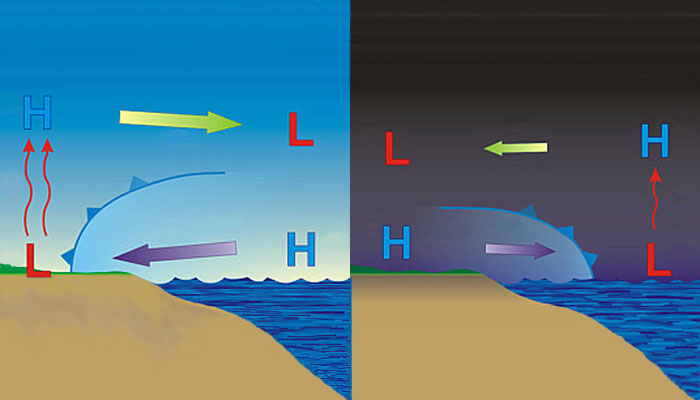
As the land warms more quickly than the sea, air over land warms rapidly after sunrise and becomes less dense; whereas air over the sea retains it’s cooler temperature.
At a given height the pressure over the land is greater than the pressure over the sea causing air to travel from the land to the sea. As a result of this transfer of mass the surface pressure over the land reduces and increases over the sea causing the surface wind to blow from the sea to the land.
a) Most of the time the sea breeze sets in around 10 am, peaks in strength at 3 pm and ceases before sunset.
These times can vary somewhat in tropical regions where sea breeze can persevere after sunset.
b) The strength of the sea breeze depends mainly on the difference in temperature of the land and the sea, but under normal circumstances it averages around 10-15 knots.
This is greater in springtime when the sea is still rather cold and the land starts to experience some high temperatures.
A greater temperature difference between the land and the sea normally produces a stronger sea breeze and vice versa
c) Sea breezes usually penetrate inland about 25 – 40 km and reach a height of about 2-3000 ft.
This depends to a large degree on terrain inland.
Eg Southern Alps may block inland travel of the breeze on the West Coast
d) It is common for cumulus cloud to develop after the sea breeze has begun.
Often referred to as Fair Weather Cumulus, it has a base of 2000 ft and tops another 1-2000 ft, sometimes showers may result.
When the prevailing wind is from the land to the sea, the sea breeze quite often forces itself inland underneath this wind and wind shear is present at the top of the sea breeze, where it borders on the prevailing (opposing) wind.
e) Interference from sand dunes, hills, steep cliffs and tree plantations on the sea breeze can cause turbulence – especially at low levels eg after taking off or approaching to land.
Explain the conditions that can cause carburettor icing while on the ground.
Carburettor icing can occur on the ground as well as during flight – mainly during taxiing
This causes rough running and a loss of power; and in some severe cases can stop the engine running.
Ideal condtitions for this are:
– wet surface such as after rain when evaporation makes the surface very moist
– taxiing close to mudflats or near the coast where the layer of air near the surface has high moisture content especially in light winds
– taxiing in rain
– taxiing over a frosty surface after sunrise
When on the ground at idle power settings, carburettor icing is a serious problem. With the throttle closed, the risk of
ice jamming the butterfly shut is high, especially if the aircraft is parked for an extended period while a novice pilot
works slowly through the pre-take-of checks. For this reason, we apply carburettor heat to melt any ice prior to
take-off.
Carburettor heat is unfiltered warm air extracted from around the exhaust system. This heated air is less dense than
the ambient air, and so there will be a noticeable drop in RPM when carb heat is applied. But being unfiltered means
there is a risk of introducing dust and seeds etc. into the carburettor and engine. These not only cause wear and tear
on the engine but may ultimately lead to an engine failure after take-of. Aircraft which are used frequently from
grass strips should be kept clean in the engine bay to avoid exacerbating this potential problem.
Explain how the accretion rate of carburettor ice is influenced by the throttle setting.
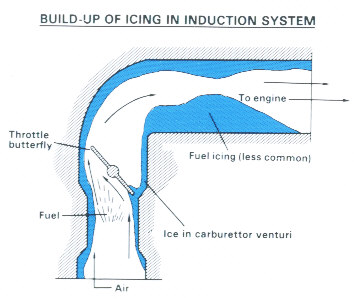
When the throttle is reduced the gaps between the Venturi wall and throttle butterfly become smaller with the result that carburettor ice near those gaps is likely to accrete faster
State the temperature range in which carburettor ice typically can form.
Carburettor icing will likely form in the temperature range +25 degrees C and -10 C to -15 degrees C
Depends on the moisture content; which means carb icing is a possibility on a hot summers day.
Explain the environmental factors involved in carburettor icing, including;
a)  moisture content;
b)  temperature;
c)  temperature gradient (inversions).
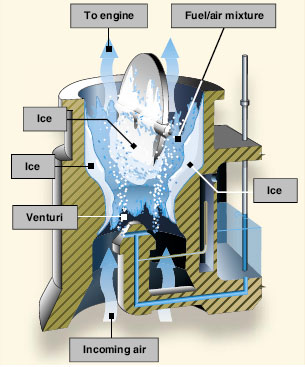
Carburettor icing occurs when cooling takes place as moist air passes through the carburettor venturi. The cooling is
partly due to the fall in pressure as the air accelerates through the venturi, and partly due to fuel evaporation, where
the latent heat of evaporation is taken from the surrounding air and metal. Combined, these two efects may lower
the temperature in the barrel by as much as 25 to 30 degrees Celsius.
The ice build-up adds to the venturi constriction and will increase the speed of the flow through the carburettor,
causing a further lowering of the pressure which in turn increases the cooling rate. Thus, carburettor ice feeds on
itself until the excessively rich mixture kills the engine (see figure 73).
(a) Moisture content;
The higher the moisture content of the air, the more likely it is that serious carburettor icing will form. This is because
the high water vapour content provides plenty of moisture to form ice.
(b) Temperature;
Clearly, if the temperature within the carburettor barrel is capable of being cooled by up to 30 deg C, the outside air
temperature (OAT) need not be close to, or below zero degrees Celsius for carburettor icing to occur. In fact, warmer
sub-tropical air can have a high water vapour content (temperature/dew point close together, 23/20 for example),
meaning carburettor icing is more likely to form at higher temperatures than at quite low temperatures where there is
limited water vapour available.
(c) Temperature gradient (inversions).
Inversions occur when warm, and often moist air overlies cold, relatively dry air. Therefore, flight immediately above
the inversion is more prone to icing than flight below it.
8.28.16 State the temperature range that carburettor ice typically forms in.
Carburettor icing can form over a wide range of temperatures, from -15C to +30C.
Explain the methods that can be used to manage the risks of aircraft icing.
Avoid icing conditions ie – flying in cloud or above the freezing level
Utilise carburrettor and pitot heat elements
Spraying anti-ice glycol before flight
State the dangers of icing to aircraft in flight and on the ground.
Aircraft in flight
Increase in drag , decrease in lift
Increase in weight, decrease in thrust
Increase in stall speed, need for longer runway
Blocking of pitot tube, static vent, fuel cap vent
Blocking of air intakes
Loss of aerial
Freezing of controls, flaps and retractable undercarriages
Aircraft on the ground
Increase in weight, need for longer runway
Blocking of pitot tube, static vent, fuel cap vent
Freezing of controls
Blocking of air intakes
Explain the influence of the following on the rate of ice accretion:
a)  water content of cloud;
b)  aircraft characteristics, components and airspeed.
a) Cloud Water Content
– the greater the water content in cloud, the greater the rate of Ice Accretion
b) Aircraft Characteristics
– sharp components gather ice more easily
– thin leading edges
– fins
– aerials
– propellor and helicopter blades
– The higher the speed at which the aircraft flies is associated with faster ice accumulation
– above 250 kts kinetic heating due to skin friction reduces the risks of icing
State the hazards for light aircraft from:
a)  snow;
b)  sleet;
c)  hail.
a) Snow
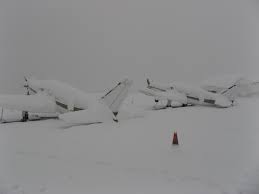
– can increase the aircraft weight and therefore reduce lift, increase drag and increase the stall speed
– can lengthen the take off distance
– worse when it has settled on the aircraft on the ground prior to take off
b) Sleet
– sometimes referred to as ‘wet snow’
– can increase the likelihood of ice coverage over the aircraft including the windscreen affecting visibility
.jpeg)
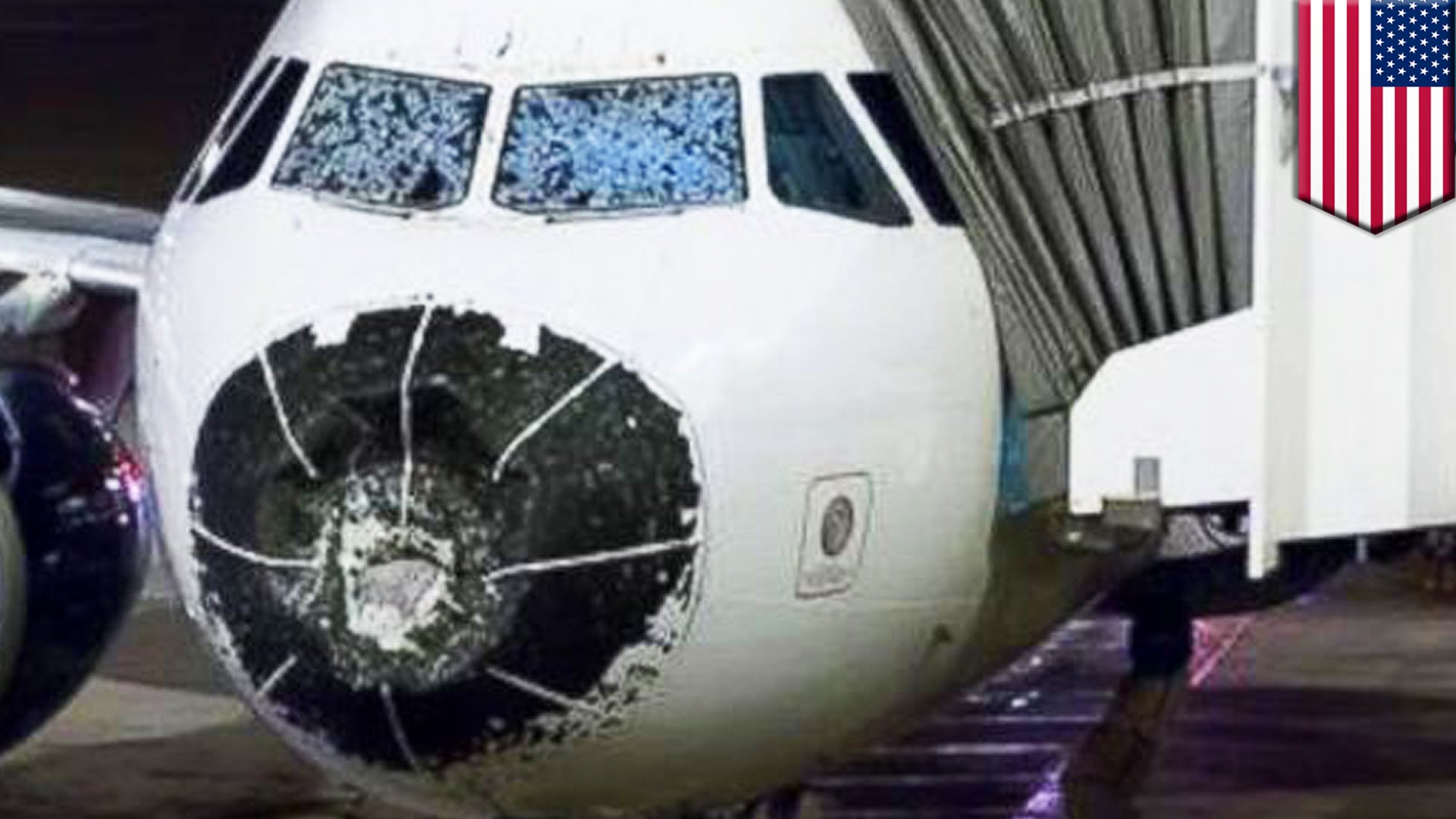
c) Hail
– in a place where there are strong up and down draughts – such as in vigorous Cumulonimbus developments
– the more intense the up and down draughts the larger the size of the hailstones
Give examples of conditions that could cause:
a)  freezing rain;
b)  hoar frost.
a) Freezing Rain
– can occur in frontal and inversion situations
b) Hoar frost
– can occur when an aircraft is parked outside on a frosty night