Our simple log process is just... 1. You enter your email (the one you use to correspond with the flying school) 2. we send you a link. 3. you click the link in your email 4, then you are all log in , ready to go. no password etc / simple as!
Condensation is water vapour condensing back the liquid water.
Visibility is greatly reduced due to cloud, Mist, fog etc.
Plus releases heat and warm the air and this is the start to all weather on earth.
Condensation in a warn environment,
Warm environment is Air mass moving over New Zealand from north or Warm Fronts etc.
A warm air in a warm environment means not much movement or stable conditions.
Cloud that is formed tends to be Stratus / layer re type clouds.
Any rain will be widespread drizzle
Condensation in a cold environment,
However warm air in a cold environment is a completely different ballgame
The warm air created by condensation will tend to rise rapidly creating towering type clouds which can grow into thunderstorms with heavy rain, hail, lightning, etc…
Enough towering Cumulus type clouds can create a low pressure area on the Earth’s surface this pressure change causes the wind to flow.
And these low pressure areas can grow into spinning cyclone / storm.
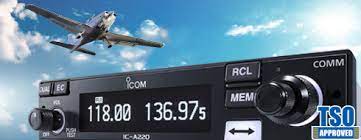
Welcome to the vital realm of “Transceivers” in your pilot theory training. Aspiring pilots, this module is more than just technicalities; it’s about ensuring your safety and the comfort of your passengers. Here’s why delving into transceivers is crucial:
Communication Mastery: Understand the purpose and intricacies of aeronautical transceivers, mastering the primary communication tool for pilots in the skies.
Hands-On Control: Learn the correct manipulation and adjustment of transceiver controls, ensuring you can navigate communication frequencies seamlessly.
Operational Proficiency: Grasp the correct operation of headsets, boom microphones, and handheld microphones, key components for effective in-flight communication.
Crisis Preparedness: In emergencies, clear communication is non-negotiable. This module equips you to confidently handle transceivers during critical situations.
Passenger Comfort: Beyond the technical, your understanding of transceivers contributes to a smoother, more comfortable journey for your passengers.
Embark on this learning journey with the knowledge that every aspect covered in this module is a step toward your proficiency as a pilot, ensuring a secure and pleasant experience for all on board.
Syllabus 2.4
2.4 Transceivers
2.4.2 Describe the purpose, correct manipulation and adjustment of the controls of commonly used aeronautical transceivers.
2.4.4 Describe the correct operation of:
(a) the headset/boom microphone combination; and (b) the handheld microphone.
Embark on a crucial segment of your pilot theory training with “Basic Radio Wave Propagation.” Understanding the intricacies of radio wave propagation is not just about passing exams; it’s about ensuring your safety and that of your passengers. Here’s why delving into this module is paramount:
Communication Lifeline: Grasp the essentials of HF and VHF, the lifelines of aviation communication, ensuring you can effectively communicate over varying distances.
Range Awareness: Learn the distinct range capabilities of HF and VHF, empowering you to maintain communication links across different flight scenarios.
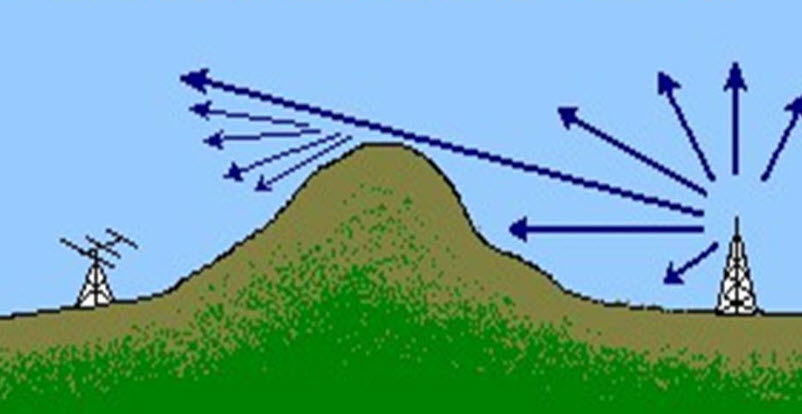
Surface Challenges: Understand how surface interference can impact radio signals, equipping you to navigate potential communication challenges near the ground.
Clarity in the Skies: Explore the clarity of reception factors, ensuring your ability to receive and transmit crucial information with precision during your flights.
Navigational Competence: Enhance your navigational competence by mastering radio wave characteristics, a skill essential for both private and commercial pilots.
This knowledge isn’t just theoretical; it’s a practical cornerstone for every pilot aspiring to soar the skies safely and confidently.
Syllabus 2.2
2.2 Basic Radio Wave Propagation
2.2.2 Describe the basic characteristics of High Frequency (HF) and Very High Frequency (VHF) in terms of: (a) range; (b) surface interference; (c) clarity of reception.
4.82.20 State the requirements for the operational testing of an ELT. AIP GEN
Live testing of 406 MHz is NOT permitted unless coordinated with RCCNZ at least two working days prior to the test
ELT transmitter test is authorised ONLY on 121.5 MHz as follows:
tests should be no longer than three audio sweeps and NOT exceed 20 seconds; and
tests may be conducted on 121.5 MHz only within the time period made up of the first five minutes after each hour. Emergency tests outside this time must be coordinated with both the nearest ATS unit and RCCNZ. Airborne ELT tests are NOT permitted.
4.82.18 State the pilot action required following the inadvertent transmission of an ELT. AIP GEN
Inadvertent activation of ELT has occurred on numerous occasions in New Zealand. It can occur as a result of aerobatics, hard landing, or accidental activation during aircraft servicing. To detect an inadvertent activation pilots should:
prior to engine shut down at the end of each flight, tune the aircraft receiver to 121.5 MHz and listen for ELT signals; and
if an ELT is heard, ensure that their own aircraft’s ELT is not operating. If it is found that it has been activated, switch it off and take the action described in 6.3.2 then switch it off.
Maintenance may be required before an automatic activation unit is returned to the armed position.
Any person detecting the inadvertent activation of an ELT must report the activation immediately to the nearest ATS unit in order that any RCCNZ action commenced as a result of the transmission may be terminated.
4.82.16 State the procedures for the emergency activation of an ELT. AIP GEN
The pilot of an aircraft in a distress situation should activate the ELT while still in flight.
To prevent valuable search time being wasted it is imperative that:
All ELTs are registered with RCCNZ.
Any ELT that is not automatically activated is switched on as soon as possible before or after any emergency and left on until rescued.
If the emergency situation is recovered, ATS or RCCNZ is notified first then the ELT is switched off.
If the ELT is switched off and ATS or RCCNZ have not been notified as soon as possible, it will be assumed that the aircraft has crashed and search planning and a SAR response will have commenced.